TSA Opens the Door for Non-Travelers to Reach Airport Gates Under New Security Program
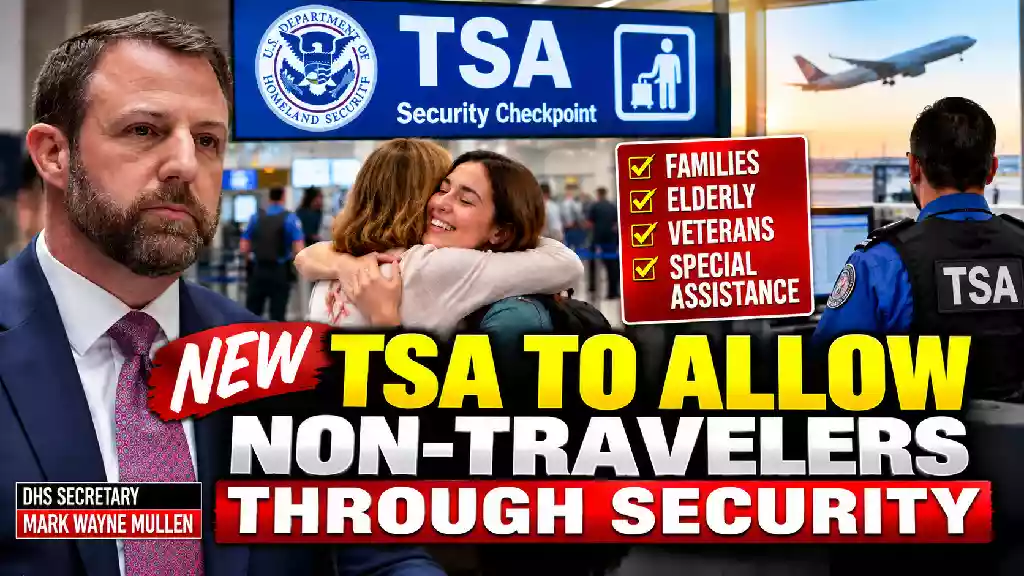
DHS Secretary Mark Wayne Mullen discusses a new TSA program that could allow approved non-travelers to pass through airport security and accompany family members to the gate.
TSA Opens the Door for Non-Travelers to Reach Airport Gates Under New Security Program
TSA Moves to Let Non-Travelers Through Airport Security to Walk Loved Ones to the Gate
A significant change could be coming to the airport experience as the Transportation Security Administration (TSA) moves toward allowing certain non-travelers to pass through airport security and accompany loved ones to the gate.
The initiative would give some people without airline tickets access to secure airport areas under a controlled process. The goal is to make air travel easier for families, elderly passengers, people needing additional assistance and others who may benefit from having a loved one nearby.
The proposal comes nearly 25 years after the September 11 attacks dramatically changed access to secure areas of U.S. airports.
New TSA Program Could Bring Families Back to the Gate
For years, passengers have generally had to say goodbye to family members before entering the secure side of an airport unless special permission was granted.
That could begin to change under the new TSA approach.
Department of Homeland Security Secretary Mark Wayne Mullen discussed the program, explaining that families sometimes need to accompany loved ones farther into the airport. Parents may want to walk children to their gates, while spouses, adult children and grandchildren may want to assist elderly relatives.
The same need can apply to passengers who require special assistance while navigating an airport.
The proposed program would provide a way for approved non-travelers to receive access while remaining within the TSA’s security framework.
Elderly Travelers, Families and Veterans Could Benefit
One of the key goals is to make the passenger experience more accommodating.
Airports can be complicated and stressful, particularly for elderly passengers or people who need additional assistance. Having a family member accompany them to the gate could provide practical support and reassurance.
Veterans are another group specifically mentioned in the discussion. Family members could potentially meet returning veterans at the gate instead of waiting outside the secure area.
The initiative is described as working through a process similar to the system used for known passengers and other established security programs. That approach could allow TSA to expand access without abandoning the screening procedures that protect secure airport areas.
TSA Says Security Will Not Be Sacrificed
Expanding airport access to people who are not traveling naturally raises questions about security.
However, Mullen emphasized that the proposed program is intended to improve the passenger experience without compromising airport or aviation security.
TSA handles approximately 2.4 million passengers each day, making the agency a critical component of America’s aviation security system. Officials continue to adjust their tactics as new threats emerge.
Mullen said security officials constantly learn from changing threats and modify their strategies and technology accordingly.
Artificial Intelligence Is Reshaping Airport Screening
The proposed access changes are taking place as TSA also looks at new technology to improve airport security.
Artificial intelligence is becoming part of that effort. Mullen said AI can be better than the human eye at recognizing certain materials in luggage, highlighting how technology is increasingly being incorporated into the screening process.
TSA is also examining how employees are assigned to different positions at security checkpoints. Rather than automatically rotating workers through every station, officials are considering ways to match employees with roles where their skills can be used most effectively.
The objective is to make TSA operations more efficient while continuing to prioritize passenger safety and aviation security.
Nearly 25 Years After 9/11, Airport Security Is Still Evolving
The discussion comes at a significant moment in the history of U.S. airport security.
The September 11 attacks transformed the way Americans travel by air. Security restrictions increased dramatically, and access to secure airport areas became much more limited.
The Department of Homeland Security was also established as part of the post-9/11 effort to bring multiple federal agencies together and create a broader approach to protecting the country.
Mullen described the department’s mission as looking at the entire security picture and responding to threats against Americans.
A New Balance Between Security and Convenience
The proposed TSA program illustrates the continuing effort to balance strict airport security with a better passenger experience.
For travelers, the change could mean having a spouse, parent, child or other loved one nearby during what can otherwise be a stressful journey. For families, it could make airport departures and arrivals more personal and less difficult.
At the same time, maintaining strict screening and controlled access will remain essential. The program’s connection to existing TSA security processes is intended to ensure that greater access does not mean weaker security.
If implemented as described, the initiative could mark one of the more noticeable changes to the airport experience since the security restrictions introduced after 9/11.
TSA Looks to Modernize the Passenger Experience
TSA’s proposed non-traveler access program reflects an effort to modernize airport security while addressing the needs of passengers and their families.
From parents helping children to relatives assisting elderly travelers and families welcoming veterans home, the initiative could give approved non-travelers a new way to support loved ones inside secure airport areas.
The broader message from TSA officials is that airport security and passenger convenience do not necessarily have to be competing priorities. With controlled access, evolving technology and updated procedures, the agency is looking for ways to improve the travel experience while keeping America’s skies safe.
#TSA #AirportSecurity #AirTravel #HomelandSecurity #TravelNews #AirportNews #TSAUpdate #AviationSecurity #TravelUpdate #PassengerSafety