House Oversight Report Alleges Minnesota Governor Tim Walz Retaliated Against Fraud Whistleblowers
House Oversight Report Alleges Minnesota Governor Tim Walz Retaliated Against Fraud Whistleblowers
New Congressional Report Raises Questions About Fraud Oversight in Minnesota
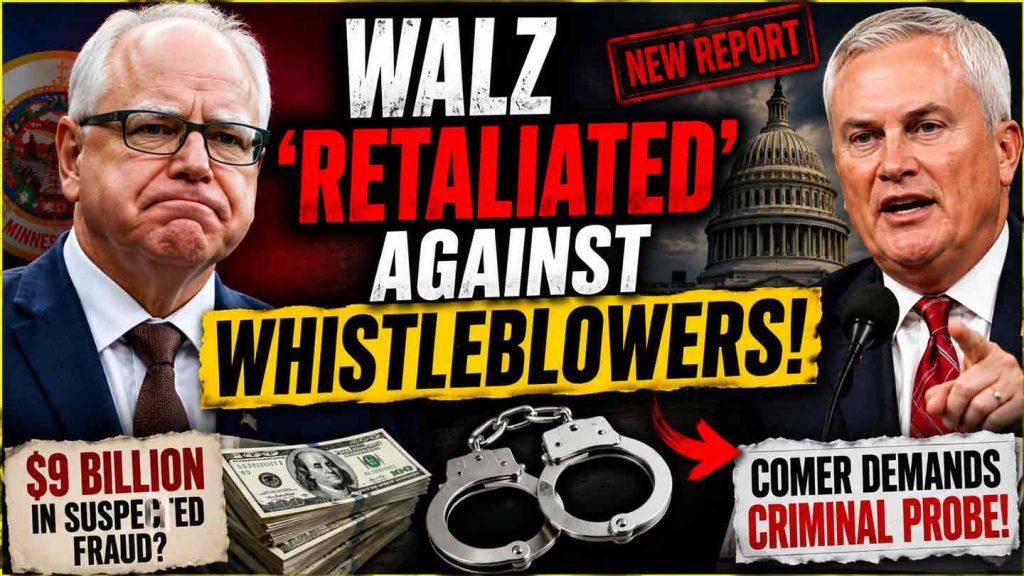
A newly released report from the House Oversight Committee has sparked controversy after alleging that Minnesota Governor Tim Walz failed to address significant fraud concerns and retaliated against government employees who attempted to expose wrongdoing. The report, led by House Oversight Committee Chairman James Comer, claims that state officials ignored warnings about fraud and took adverse actions against whistleblowers who raised concerns.
The allegations have intensified scrutiny over Minnesota’s handling of public funds, particularly federal assistance programs that were expanded during the COVID-19 pandemic. The findings have also prompted calls for further investigation by federal authorities.
Whistleblowers Claim Warnings Were Ignored
According to Chairman Comer, nine career government employees came forward with evidence of suspected fraud within state-funded and federally supported programs. The report states that these whistleblowers followed proper procedures by reporting their concerns to supervisors, state agencies, and top Minnesota officials.
However, the committee alleges that Governor Walz and other state leaders failed to act on repeated warnings. Comer praised the whistleblowers for their efforts, describing them as key figures in uncovering what he characterized as widespread mismanagement and oversight failures.
The report suggests that instead of investigating the claims thoroughly, state leadership allegedly allowed questionable payments to continue despite growing concerns from internal staff.
Allegations of Retaliation Against Employees
One of the most serious claims in the report involves alleged retaliation against whistleblowers. Comer stated that some employees faced negative consequences after continuing to report suspected fraud.
Whistleblower protection laws are designed to shield government employees from retaliation when reporting misconduct, waste, fraud, or abuse. The committee argues that any retaliation against those individuals could represent a separate and serious issue beyond the fraud allegations themselves.
The report calls for increased accountability and a closer examination of how whistleblower complaints were handled within Minnesota’s government agencies.
Federal Investigation Requested
The controversy escalated after Vice President J.D. Vance reportedly received the House Oversight Committee report and referred the matter to the Department of Justice’s Fraud Division for further review.
If federal investigators determine that criminal misconduct occurred, the case could lead to additional legal actions against individuals responsible for overseeing the programs in question.
Supporters of the investigation argue that taxpayers deserve transparency regarding how public funds were managed, particularly during a period when federal pandemic relief programs distributed billions of dollars across the country.
Billions in Potentially Mismanaged Funds
The report highlights several large-scale fraud concerns that have attracted national attention. Among the most significant allegations are claims involving hundreds of millions of dollars in federal nutrition assistance funds intended to help children during the COVID-19 pandemic.
Additionally, lawmakers cited concerns about billions of dollars in potentially fraudulent Medicare billing activities. While the exact scope of the alleged fraud remains under review, the figures mentioned in the report have raised alarm among government watchdogs and fiscal conservatives.
Critics argue that stronger oversight mechanisms could have prevented substantial financial losses and ensured that taxpayer dollars reached their intended recipients.
Political Debate Intensifies
The allegations have quickly become part of a broader political debate surrounding government spending, fraud prevention, and accountability.
Republican lawmakers argue that political considerations may have influenced decisions regarding enforcement and oversight. Democrats, meanwhile, have pushed back against the accusations and have often emphasized the importance of avoiding politically motivated investigations.
As the Department of Justice reviews the allegations, both parties are expected to continue debating the findings and their implications for public policy.
Calls for Greater Accountability
Chairman Comer emphasized that holding public officials accountable is essential for maintaining public trust in government programs. He argued that government leaders must respond quickly when fraud concerns arise and ensure that whistleblowers are protected rather than punished.
The investigation remains ongoing, and federal authorities have not yet announced any formal charges related to the allegations outlined in the report. However, the findings have already renewed national discussions about fraud prevention, government transparency, and the responsibility of public officials to safeguard taxpayer funds.
As additional details emerge, the case is likely to remain a focal point in discussions about government accountability and public-sector oversight.
Conclusion
The House Oversight Committee’s report has brought renewed attention to allegations of fraud, oversight failures, and whistleblower retaliation in Minnesota. While the claims remain subject to further investigation, the controversy underscores the importance of transparency, accountability, and effective fraud prevention measures in government programs. The outcome of any federal review could have significant implications for state officials and future oversight practices nationwide.
#TimWalz #Minnesota #FraudInvestigation #Whistleblower #JamesComer #HouseOversight #GovernmentAccountability #DOJ #TaxpayerFunds #PoliticalNews