Kevin Stitt Outlines Oklahoma Education Changes as Students Return to Classrooms
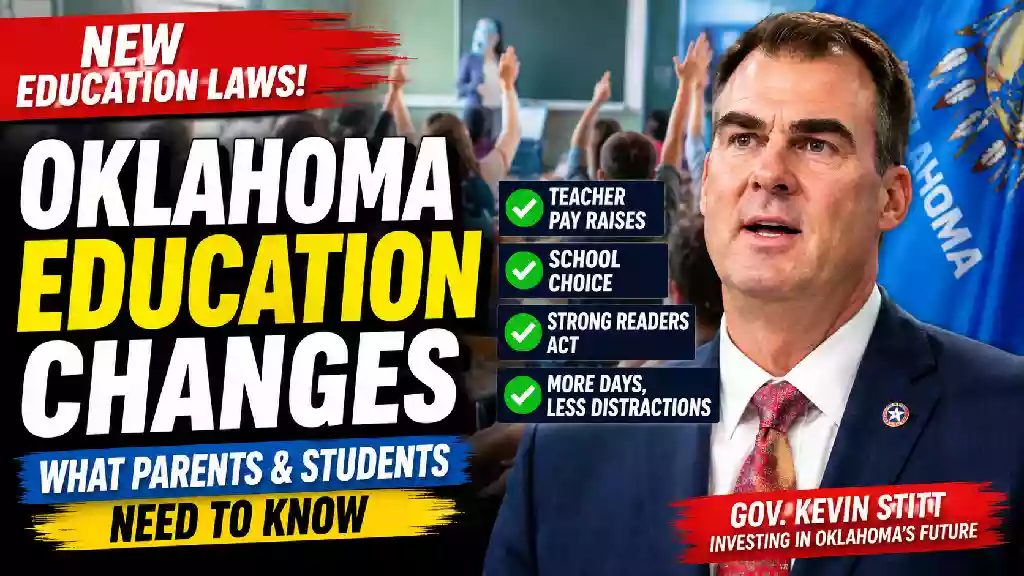
Oklahoma Gov. Kevin Stitt highlights major education changes, including teacher pay raises, expanded school choice, the Strong Readers Act and increased classroom learning as students return to school.
Kevin Stitt Outlines Oklahoma Education Changes as Students Return to Classrooms
Oklahoma Schools Enter New Era as Kevin Stitt Pushes Education Overhaul
As students across Oklahoma return to school, Gov. Kevin Stitt is putting the spotlight on a series of education changes designed to expand classroom learning, strengthen literacy, increase teacher compensation and give parents more control over where their children attend school.
In a back-to-school discussion, Stitt emphasized the importance of teachers and described education as one of the state’s most important investments. He also outlined several policies implemented or advanced during his administration, including the Strong Readers Act, changes to instructional days, teacher pay increases and expanded school choice.
Stronger Focus on Reading and Classroom Learning
One of the major education initiatives highlighted by Stitt is the Strong Readers Act, which focuses on reading and literacy among Oklahoma students.
The governor also pointed to changes involving virtual instruction. He said the state eliminated virtual school days after concerns about how some districts were using them. Oklahoma has also increased the number of school days, according to Stitt, as part of an effort to provide students with more time for in-person learning.
Stitt stressed that students benefit from being in classrooms with qualified teachers and said reducing distractions is an important part of improving the learning environment.
The changes come as Oklahoma schools begin another academic year and educators prepare to address the academic and social needs of students across the state.
Teacher Pay Remains Central to Education Strategy
Teacher compensation has been a major component of Stitt’s education agenda. The governor discussed three teacher pay increases during his administration, including the latest increase that took effect in July.
Stitt said improving teacher salaries was one of the motivations behind his decision to run for governor. He argued that Oklahoma needs competitive salaries to attract and retain highly qualified educators.
He also pointed to programs that can provide higher compensation for teachers based on merit and other factors. According to Stitt, some Oklahoma teachers are now earning salaries of $100,000 or more.
However, the governor emphasized that improving education is about more than salaries. He said teachers also need to feel respected and appreciated and should have a supportive environment in which to work.
The administration’s goal is to make teaching a more attractive profession while encouraging experienced educators to remain in Oklahoma classrooms.
Parents Gain More School Choice Options
Another major part of Oklahoma’s education strategy is expanding parental choice.
Stitt highlighted the state’s School Choice and Parents Hub, which gives families a way to explore schools in their area. Parents can use the resource to compare educational options and identify schools that may better meet their children’s needs.
The governor also emphasized open transfer opportunities within the public school system. A student interested in a particular academic or career program, for example, could potentially transfer to another public school offering that program.
Stitt said school choice should not be limited to private education. He pointed to public schools, charter schools, private schools, STEM-focused programs and other options as part of a broader approach to giving parents more control.
He also discussed Oklahoma’s refundable tax credit for families choosing private education, saying that tens of thousands of students are using the program.
Preparing Students Beyond the Classroom
Stitt also outlined a vision that goes beyond traditional college preparation.
The governor said Oklahoma needs to expose students to a wider range of career opportunities, including apprenticeships, career technology programs and workforce training.
His message was that not every student will follow the same path after high school. Some may attend college, while others may enter technical careers, apprenticeships or other workforce programs.
Stitt also discussed efforts to create pathways into higher education and the workforce while limiting the amount of debt students accumulate.
The emphasis on career preparation reflects a broader goal of connecting education with the state’s workforce needs and helping students understand the opportunities available to them after graduation.
What Oklahoma’s Education Future Could Look Like
With Stitt entering his final school year as governor, education is likely to remain an important part of his administration’s record.
His back-to-school message focused on several priorities: improving literacy, keeping students engaged in classrooms, increasing teacher compensation, expanding parental choice and creating more career pathways.
The impact of those policies will ultimately depend on how they are implemented in schools and how students, parents and teachers experience the changes.
For Oklahoma families, the new academic year provides an opportunity to see how these education policies translate into everyday classroom experiences. As students begin another year, the state’s focus is increasingly on giving families more options while preparing young people for college, careers and the workforce.
#OklahomaEducation #KevinStitt #OklahomaSchools #EducationReform #SchoolChoice #TeacherPay #StrongReadersAct #OklahomaStudents #OklahomaTeachers #BackToSchool #EducationPolicy